
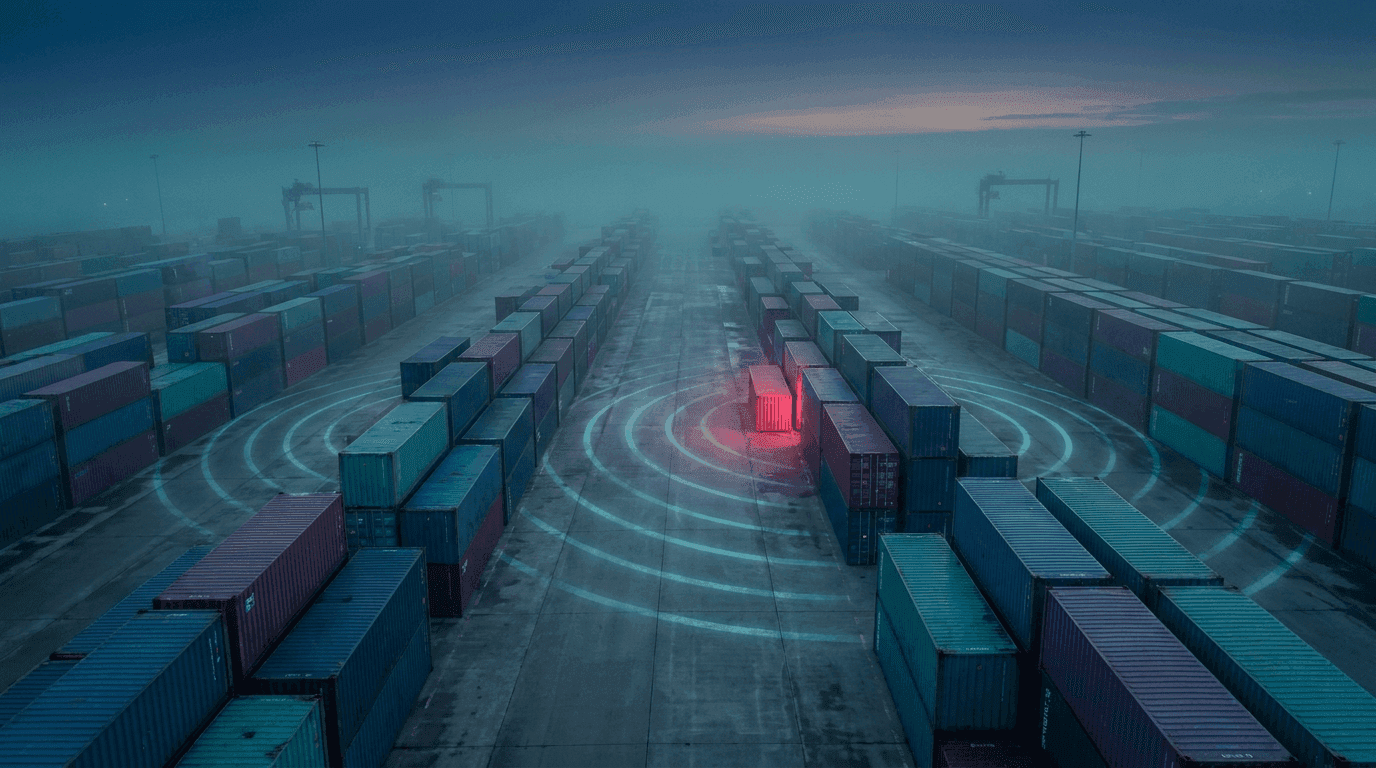
Demurrage shows up on the shipments that were going fine. A container clears the vessel, sits at the terminal, and a free time window the carrier set starts counting down while nobody on your side is watching. Two days later someone notices, and by then each of those days has a price.
That is the half of trade operations that rarely makes it into a case study. The shipment arrived. It just arrived late, by a margin small enough that everyone assumed someone else was tracking it.
One order, several movements

Containers under the same order do not always travel together. Space runs short, a port congests, a vessel reschedules, cargo gets rolled to the next sailing. On paper it reads as a change of vessel or voyage. In practice, the shipment stops being one movement and becomes several.
Each container then carries its own timeline: vessel arrival, container availability, customs clearance, free time, CY (container yard) storage, truck dispatch, warehouse receiving, final delivery. Every one of those has a cost attached, and the costs sit in the gaps between them. A container dispatched too late runs up CY storage or demurrage. A truck sent too early waits, because the box is not available yet. Three containers landing the same morning overrun the warehouse. One vessel schedule change moves all of it downstream.
None of these decisions is hard on its own. The difficulty is having to make them together, and having to redo them every time one date moves.
Where the schedule actually lives
Ask a trade team where the current schedule is and the honest answer is: in a few places at once. Part of it is in a spreadsheet that was accurate on Monday. Part of it is in a forwarder's last phone call. Part of it is in the memory of the one person who knows which vessel is always late out of which port.
A schedule changes faster than any single document can hold, so it scatters by default into whoever last touched which piece. As volume grows and voyages fragment, the number of variables grows faster than the time anyone has to check them. No one holds a single view, so no one sees the slip until it has already become a charge.
The schedule and the documents are the same problem
We started TraderSage on document verification: making sure the same container number, the same quantity, the same date read correctly across the contract, the commercial invoice, the packing list, and the bill of lading. Schedule tracking looked like a different job. It is the same job, seen across time.
A date in a shipping document does more than sit in a field. It starts customs prep, free time calculation, storage cost, truck dispatch, and delivery planning. The regulator treats it that way too: under the FMC's demurrage and detention billing rule, in effect since May 28, 2024, a U.S. invoice has to carry the bill of lading number, the container number, the allowed free time, and the start and end dates of that free time. The document you reconcile and the date you watch are the same record. The discipline that keeps a container number consistent across five documents is the discipline that keeps a timeline reliable. You need one reference point, and everything else checked against it.
What we are building
So the booking becomes that reference point, the way the contract does for documents. Vessel changes, ETA updates, free time expiry, expected CY storage, the next truck: each gets checked against the reference and against the rest of the shipment. When a date moves, the system does the arithmetic nobody has time to redo by hand, flags the container coming up on the end of its free time, compares the dispatch options, and points to what just changed downstream, while there is still room to act.
It does not make the decision. Which box to move first, whether to hold one at the CY another day because the warehouse is full, when to accept a storage charge to protect a delivery: those still take commercial judgment. The job is to get the relevant information assembled and compared fast enough that the judgment has somewhere to land.
Customers asked for this. Once document verification was working, they said, in various words, the same sentence: this is good, now keep track of the dates too. So that is what we are building next, with them, one shipment at a time.
Trade rarely breaks. It runs late, a container at a time, until the late is expensive. We would rather catch the day it starts slipping than read the invoice after it stops.
If your schedule lives in a spreadsheet, three inboxes, and one person's memory, we would like to hear about it.