
The Layer Nobody Is Fighting Over
When AI agents do the work, software value moves down the stack.
Much of the conversation today is focused on the orchestration layer: which agent owns the workflow, which system executes the task, and which interface replaces the SaaS seat.
But that conversation skips a more basic question.
Can the agent actually read the company's data?
For many companies, the answer is: not reliably.
AI agents can only act on what they can read
Most enterprise knowledge was not created for AI.
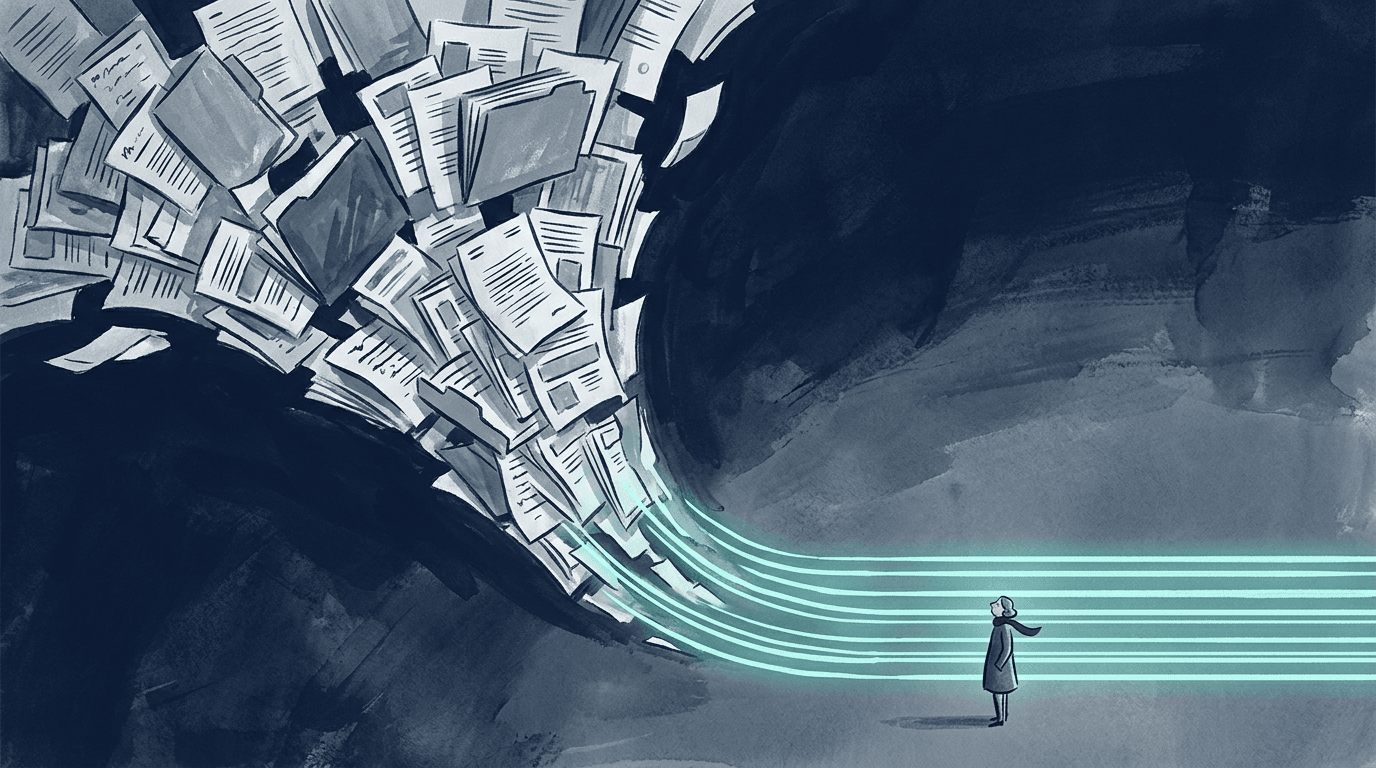
It lives in scanned PDFs, mixed-language contracts, presentation decks, email attachments, and exports from systems nobody maintains anymore. Tables lose their structure. Relationships between documents disappear. Permissions live somewhere else entirely.
Connect an agent to this environment and the failure looks like a model problem.
The agent misses information. It gives incomplete answers. It fails on the files that matter most. The natural conclusion is that AI is not ready for the business.
The model never got a fair shot. It never received the company's knowledge in a form it could reliably use.
The layer below orchestration
There is a layer underneath the agent and orchestration stack that gets far less attention.
We call it the reading layer.
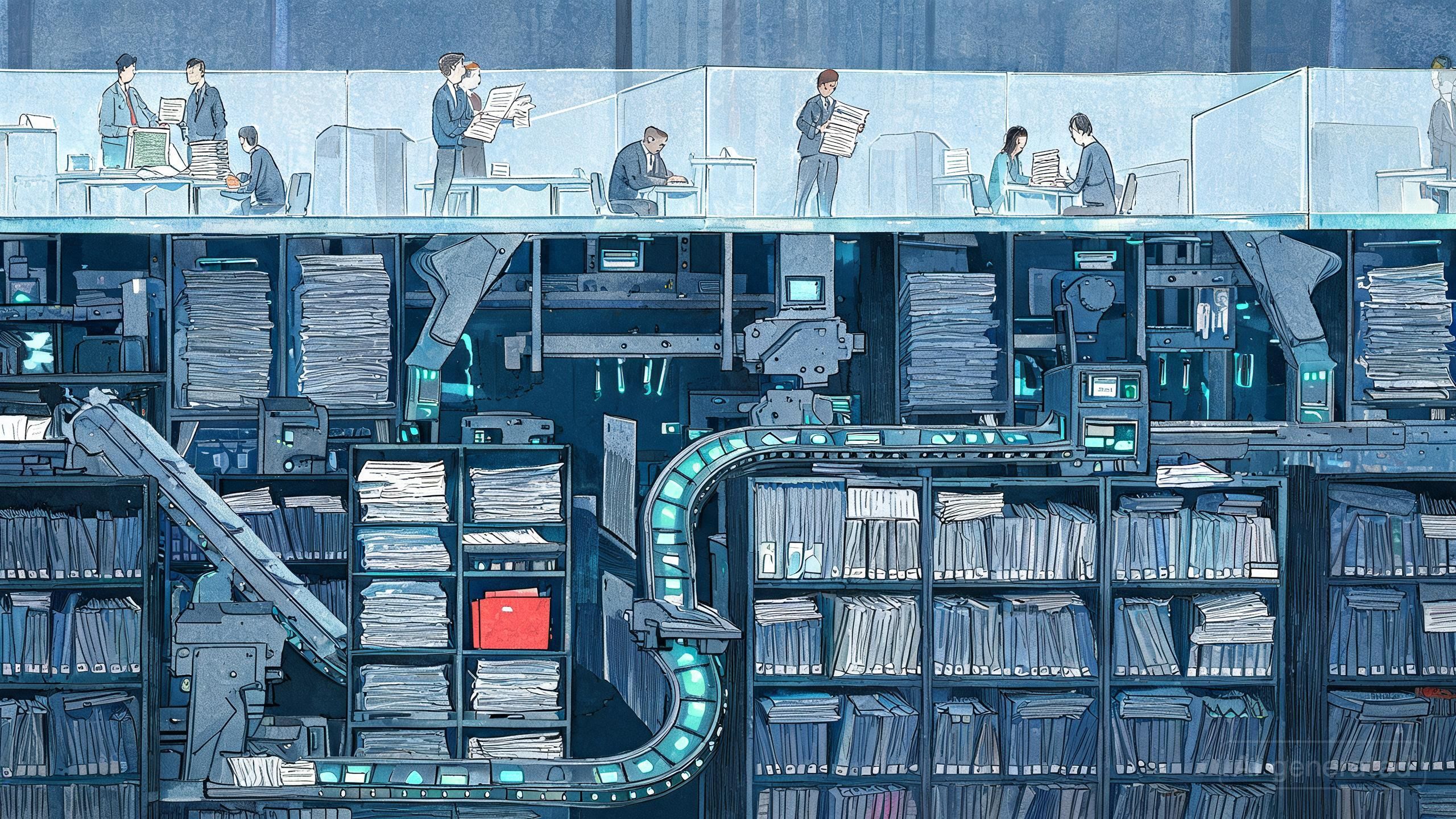
The reading layer turns a company's real documents into information an agent can act on. It extracts and preserves structure, context, relationships, and permissions so an agent can reason across company knowledge instead of searching through a pile of disconnected text.
When this layer works, it is almost invisible.
When it fails, everything built above it becomes less reliable.
Data gravity starts at the reading layer
Proprietary data is often described as the durable moat in an AI-native software stack.
Raw files carry little gravity on their own.
A million documents sitting in a drive have little value to an agent until their contents, structure, and relationships become usable. The gravity begins when those documents become queryable across workflows.
That happens at the reading layer.
Governance follows the same logic. Permissions, access controls, and audit trails become meaningful when they govern the information an agent can actually retrieve and use, not the folder where the original file happens to live.
The reading layer also shapes unit economics.
If documents have to be interpreted again every time an agent needs them, understanding becomes a recurring query cost. If that work happens once at ingestion and the result can be reused, the economics change.
These choices happen below the orchestration layer, but they determine what is possible above it.
Where VaultSage sits in the AI stack
This is the layer VaultSage is built for.
When documents enter VaultSage, they are processed into structured, queryable information that agents can use across formats, languages, and generations of company data.
The result is not just extracted text. Structure and context are preserved. Access controls determine what can be retrieved. Audit trails make that access visible.
Documents are understood once, then made available to the agents and applications that need them.
The orchestration layer can compete over who runs the workflow.
VaultSage provides the reading layer that makes the workflow possible.
Where value settles in an agent-run stack
The debate over whether AI agents replace SaaS seats is happening one layer too high.
Interfaces will change. Workflows will change. The systems that execute work will change.
But every agent still depends on one thing before it can do useful work:
It has to understand the company's data.
That makes the layer between raw enterprise documents and agent execution unusually important. It is where proprietary data becomes usable, where governance attaches to information, and where the economics of repeated understanding are determined.
If agents become the interface to enterprise software, the reading layer becomes part of the infrastructure underneath them.
That is the layer worth owning.
And almost no one is fighting for it yet.
See what the reading layer looks like in practice at vaultsage.ai.
FAQ
Where does SaaS value go when AI agents do the work?
As agents take over more tasks, value moves from the per-seat interface toward the infrastructure those agents depend on. That includes the systems that ingest, structure, govern, and retrieve company knowledge.
Why do enterprise AI agents struggle with real company data?
Enterprise knowledge lives in formats that are difficult to use reliably: scanned PDFs, complex documents, mixed-language files, attachments, and exports from legacy systems. An agent can answer the question only when the underlying information has been made usable.
What is the reading layer?
The reading layer is the infrastructure that converts raw enterprise documents into structured, permissioned, queryable information that agents can reason over. It sits between a company's source documents and the agents or applications that use them.
What is data gravity in an AI context?
Data gravity is the pull that accumulated, usable data creates around the applications and workflows that depend on it. In an agent stack, that gravity starts when raw documents become information agents can reliably retrieve and act on. That transformation happens at the reading layer.